 AN INDEPENDENT VOICE OF PUBLIC.


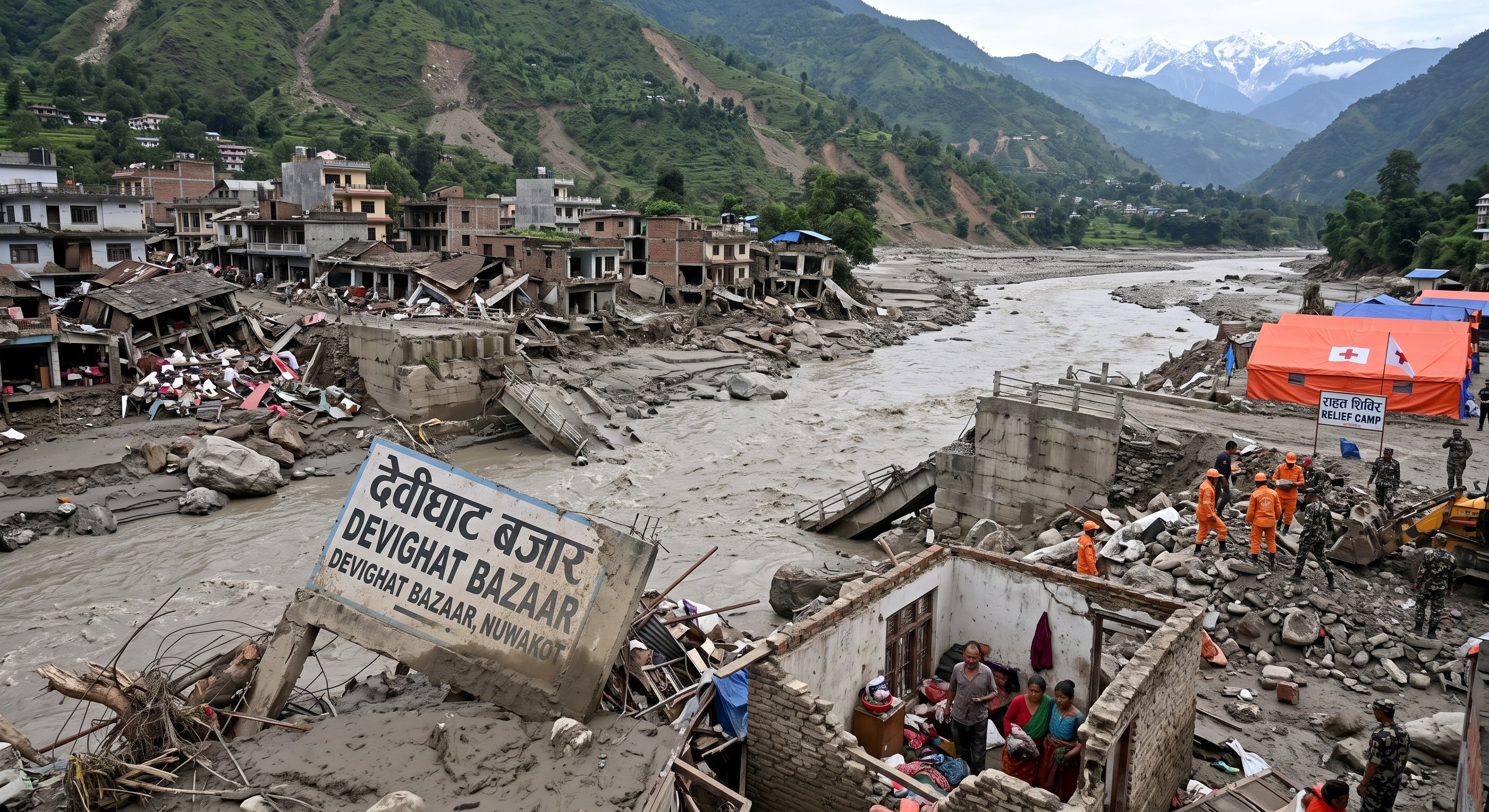
More than 100 families displaced by the Bhotekoshi floods are living in two temporary settlements in Bidur, Nuwakot, while waiting for clarity on permanent housing. Although basic services have been arranged at the sites, uncertainty over where and how their homes will be rebuilt remains a major concern for the families.
The survivors were evacuated from Uttargaya-1 and Aamachhodingmo rural municipalities in Rasuwa after the devastating Bhotekoshi flood on August 26, 2026. They were initially accommodated at Himalayan Boarding School in Battar, Nuwakot, before being moved to two temporary shelters in Bidur Municipality-5.
The settlements, located at Kodobari and Thulobari, are being coordinated by the Nepal Red Cross Society. According to details reported from the sites, 75 families are staying in Kodobari and 37 in Thulobari, bringing the total to 112 families. Thulobari is mainly home to people displaced from Uttargaya-1.
Basic Facilities Provided at the Settlements
The Red Cross has leased the land for the shelters for two years. Other organisations, including Save the Children and Child Friendly School, are also involved in supporting affected families.
The temporary sites have been arranged to provide separate living space for displaced households. Kitchens are being built so families can prepare their own meals, with one kitchen designed to be shared by about 10 people. The Red Cross says food and other daily necessities are also being managed at the settlements.
Residents have access to drinking water and toilets, while around 100 school-age children from the two sites have been connected with a nearby school. Health workers have been assigned to provide basic treatment, and psychosocial counsellors are supporting residents coping with the effects of the disaster.
Despite these arrangements, some needs remain. A young resident, Anjila Tamang, said women face difficulties finding privacy and suitable facilities to change clothes and sanitary pads after bathing. Her account points to the need for shelter planning to address privacy and menstrual hygiene alongside food, water and sanitation.
Permanent Housing Remains the Main Concern
For many families, the most pressing issue is not the day-to-day management of the camps but the lack of certainty about permanent resettlement. Residents are reluctant to rebuild independently at their former locations because they do not know whether the government will later announce a different housing plan or provide support for safer reconstruction.
Some fear that if they construct modest shelters using their own resources now, they could be left behind if a government-backed permanent housing programme is introduced later. That uncertainty has also complicated the planning of assistance by non-governmental organisations.
The Nepal Red Cross has entered an agreement covering 1,000 temporary shelters and 1,000 permanent houses for flood-affected families. However, the implementation of housing support depends on decisions over land, the final number of eligible households and the model of construction. The families in Bidur are therefore still waiting for a clear timetable and details of what assistance they will receive.
The human impact of displacement also varies across age groups. A counsellor working at the settlements said children had shown improvement and were gradually moving beyond the immediate fear of the floods, while adults and older residents remained anxious about their future.
The temporary shelters have provided a degree of stability after the disaster, but they are not a substitute for secure homes. Until authorities clarify the resettlement plan and the support available to each household, families in Bidur will continue to face uncertainty over where they can rebuild their lives.


Join the conversation
Comments are reviewed before publication. Your email stays private.