

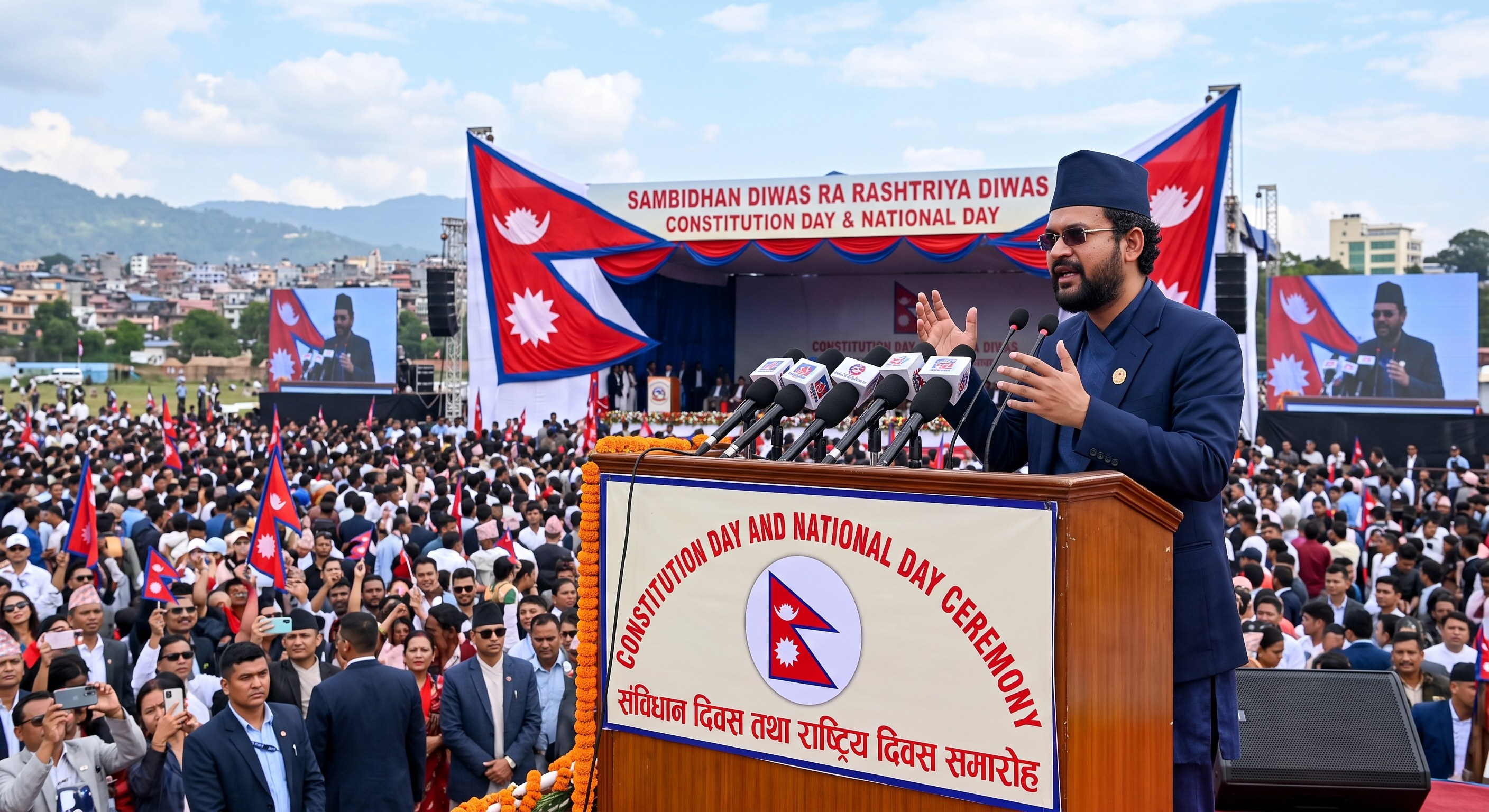
Kathmandu — Eleven years after Nepal’s constitution was promulgated, a Constitution Day round table organized by Ratopati brought together former Prime Minister Dr. Baburam Bhattarai, Rastriya Swatantra Party General Secretary and lawmaker Bipin Acharya, and CPN-UML central committee member Rachana Khadka to discuss constitutional amendment and implementation.
Bhattarai said the constitution institutionalized major changes including popular sovereignty, republicanism, federalism, secularism and inclusion, while arguing that several structural issues still require attention. He advocated a directly elected executive president, a fully proportional parliament, reconsideration of provincial boundaries and judicial restructuring aligned with federalism.
Acharya said the constitution’s fundamental spirit was not the central problem, pointing instead to weaknesses in implementation and governance. He said the constitutional amendment discussion task force had collected views from more than 44,000 citizens and stakeholders, and argued that any amendment should follow extensive consultation and national consensus.
Khadka argued that the constitution has not yet been fully implemented, including through laws and transfers of authority required for federalism. She said substantial constitutional changes should proceed only after serious national deliberation and consideration of their wider institutional consequences.
The three participants placed different emphasis on structural amendment and implementation, but each called for protecting the constitution’s fundamental framework while directing greater attention toward good governance, economic and social transformation, and public confidence in state institutions.



Join the conversation
Comments are reviewed before publication. Your email stays private.